Pages

Friday, October 7, 2011

A shiny new SPATULA...

I have officially embarked on a new and exciting adventure known as "the Studious Project of Academic Ambition".  I will refer to it as SPATULA for short (SPATULA, as I'm sure you're aware, isn't actually an accurate acronym but I've always wanted to have a reason to use SPATULA as an acronym in my life and since this SPATULA is something I made up anyway I figure I can call it whatever I want).  The SPATULA is my first attempt at entering the world of grown up student-dom.  Cause real-life college students work on projects with professors to mentor them, and semi-important people to look at them after, or so I've heard, and I have made it through 5 years of college without ever doing such a thing.  I haven't ever even applied for an internship, let alone been accepted and done an internship.

So what the SPATULA actually is an ORCA project.  I have no idea what ORCA stands for, aside from a smallish black and white whale.  But what it means is money to do something you want to do.  Yeah.  An ORCA project is where a student goes to a professor that she likes and says "hey, so I've always wanted to write this ridiculously massive blog post that no one would ever take the time to read about comic book movies and Jane Austen characters and cartoon anti-heroes and how they are all examples of the conflict between duty and inclination in the heroic figure.  But since nobody would read that as a blog post I thought maybe I should turn it into an official research paper instead.  Do you want to help me with that?" and he says "That sounds like a great idea!  Let's do it!" and then we sit in his office and talk a little bit more about my idea and he says "You have a lot of really good ideas here, but there are about 5,000 of them and you should probably limit them down to 1, or 5 at most so why don't you go home and try to do that."

So you go home and spend a week trying to figure out how to pick one idea out of all those ideas that is your favorite.  And after a week of thinking you go back to talk to your professor and the only progress you've made is actually the exact opposite of progress in that you've actually thought of more ideas instead of weeding some out.  So you tell your professor all the ideas you've added, and you talk for a little while and then somehow magically during your conversation you realize that you actually have found that one unified idea you want to discuss.  So then you go back home and for another week you research whether or not anyone has already written the paper that you want to write.  If they haven't, congratulations you get to tread brand new pointless academic soil.  If they have, well, rethink your idea or do it again but better.  Then, after you've done that research you take that beautiful nugget of an idea and write up a proposal that sounds really awesome.  You mention how your idea is so fabulous that you actually need two professors to mentor you.  And you really really want to write this paper.  So much that you're volunteering to write a completely superfluous research paper in the midst of your semester of required papers and other homeworks.  And then you take that proposal to a bunch of professors and try to inspire their enthusiasm with yours so that they say "Oh my gosh, we think that is a truly fantastic idea!  So fantastic do we find this idea that we want to give you some moneys to put take this idea and write that research paper.  Here, take this $1500 dollars that we have lying around and go and write your paper!"

And after they give you your $1500 dollars you...go and do your project.  You do real research and really start digging into your ideas and write the research paper you've been wanting to write.  I don't actually know how long you have to do this project, nor do I know how particular they are in the way you use your newly acquired funds in the pursuit of the final product.  These are mysteries, however, that I assume I will penetrate very soon.  Because I have officially embarked on my SPATULA.  I have completed the first half of that paragraph up there.  I've spoken to my professor and we've discussed my idea.  And as of today, we somehow managed to find that core idea at the heart of it all that I really wanted to focus on.  Are you ready for this?  The core idea of my SPATULA will be the following:

Utilizing the exaggerated nature of the comic book superhero persona I will examine the definition of Heroism and the conflict between the heroic persona and the individual will.  

Pretty cool, eh?  Can you believe that I construct sentences like that for fun? 

I'm going to be focusing on three main references for my project.  Superman, Batman, and V (from V for Vendetta).  I think that they represent three clear points on the spectrum of the hero.  But that is all I'll say about them lest I start boring you all with the subject that was too boring to be a blog post (see, it was too boring to be a blog post, but writing about how it was too boring to be a blog post was not...huh).  

And that, my friends, is my SPATULA (do you all still remember that SPATULA actually stands for Scholastic Project of Academic Ambition?).  Sitting here on my bead trying to think of something to do on yet another plan-less Friday night, the best possible idea I could come up with was to write a blog post about it.  Having done so, I shall endeavor to keep the world apprised of my progress.  It's possible this will be an extremely short saga, if I either don't get my proposal completed by October 28 (the proposal deadline) or I do but the board decides that it isn't worth funding.  Although, even if they don't, it isn't like this is a project that really requires all that much money.  I could just continue on with it even if they don't approve it.  I think that I shall.  This idea has actually been fermenting in my brain for about three years and I figure, if it has that kind of staying power, then it deserves to finally come to maturation.  

So, my friends, here I shall leave you.  Here on the very brink of a SPATULA, as I endeavor to take my adolescent existence and force it into an adult one.  We'll see how this works out...

Tuesday, August 30, 2011

A Minor Rant

Today I went to the photography class I have been looking forward too all summer.  I thought I registered for it last winter, but turns out I was mistaken.  I emailed the professor a few weeks ago but I never heard back.  So today I ditched the class I'm actually registered for and crashed this one, full of naive hope that I could add.  Sill, silly girl

You see, art classes are not for the general masses  Oh no!  They are exclusively reserved for Art People.  I was informed today by a man named Val that his first priority is his Visual Art students--they're the ones he's paid to teach--so they are his first priority for adding.

Now, don't mistake me.  I understand the need to restrict some classes and require pre-req's and so on.  But here are my two problems with Val's attitude.  First, he's only paid to teach VA students?  Excuse me?  So, if somehow he got a classroom full of Non-Art People they would expect him to teach for free?  Any Non-Art Person who sneaks in is just getting slip-shod volunteer time?  Hmmm...And second, if this is a VA majors only class then mark it as such.  But don't say it's an open enrollment class and then tell the commoners that they're only allowed if there's enough room.  No.  Open classes are first come first served., and if I care enought to get to class 20 minutes early just so I can add the class and your Art Person shows up 5 minutes late...or on Tuesday...well, who do you think is more interested in your class?

Which leads me to my last point.  As I say, I completely understand limiting your upper level classes to actual students in the major.  But introductory, 100 level classes exist specifically to introduce people to a discipline. The classes are already severely limited by size, why do you need to limit them further? Oh wait, it's only the art department that does that.  Unless you're in the program already there is simply no way you can take any kind of art class.

This policy is frustrating to me on so many levels.  Primarily, what if you simply don't know that you could or should major in art?  When your access to those classes is limited you aredenied the opportunity of making an informed decision.  But even more important, to me at least, are the people who know that they aren't going to be artists, but maybe want to develop a talent anyway.  Isn't that supposed to be something we'r encouraged to do?  So why is the Art Department so set on preventing it?

So how do we fix this problem?  First, and easiest, don't list your class as open enrollment if it really isn't.  "We let in non-majors if we need to fill desks" does not qualify as open enrollment.  Then, having created a closed enrollment class, make one that's legitimately open--even just a section of one.  Give Non-Art People a chance to be a little bit arty and see if maybe they're good at it.  It's only one section of one class after all...

Thursday, August 4, 2011

Parenting

Admittedly, I’m only 24, unmarried, and childless.  I haven’t exactly been deployed in the trenches.  On the other hand, I would say I’ve been a solid member of the medical teams who take care of those in the trenches.  That is to say, I have spent the last four years of my life working in the service industry.  Most of those four years were spent in a well-known retail store working either at the register or behind the returns desk (do you like my attempt at anonymity for my former employer?).  Then, about 3 weeks ago I abandoned the world of retail to come work in a customer support call center for fairly sizable national security company.  What that amounts to is a lot of experience dealing with unhappy people of all ages.
I’ve come to the conclusion that there are two sorts of disgruntled customer.  There is the passive and then there is the aggressive.  The Passive Customer is someone who is ready to bend over backwards to make sure that you, the person who has, by proxy at least, screwed them over, don’t get offended.  They apologize for the inconvenience of bringing their problem to your attention.  They don’t insist on anything.  They don’t argue with anything you tell them.   I had a woman call me the other day who was mistakenly charged $150 more than she was supposed to and she actually told me that it was ok, not to worry about it, these things happen.  One hundred and fifty dollars she was willing to throw away because she didn’t want to be unpleasant or make a scene!  I could have kissed that woman.  Needless to say, I went all out for this lady to make sure that, whether she insisted on it or not, we did not rip her off.  I got her problem taken care of and there was much rejoicing throughout the land.  For a Passive Customer, that is to say someone who is Nice, I’m willing to go to the ends of the earth. 
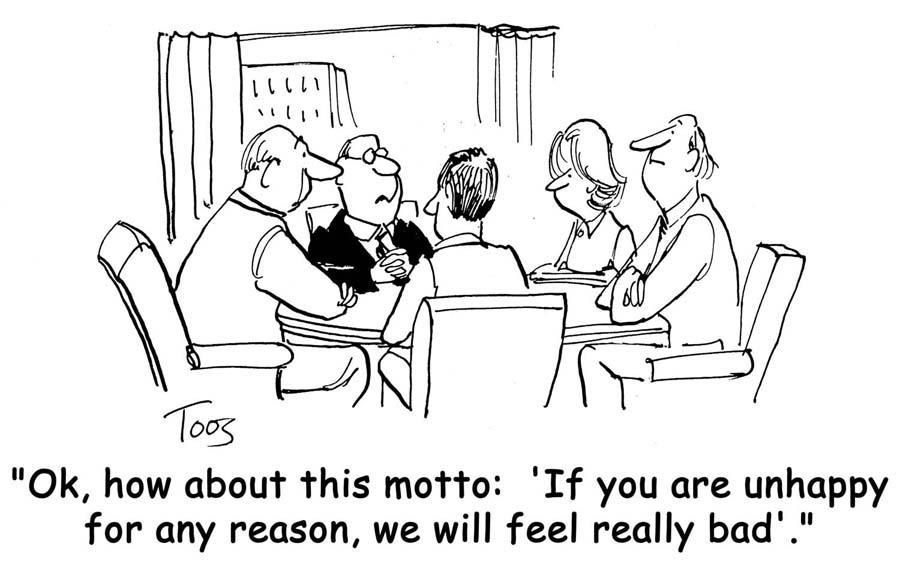
why doesn't this guy work in my office?
I bet he gives great customer support
The second type is not so pleasant.  This is the Aggressive Customer.  This is the guy who calls you already worked into a rage and all you have to do is tell him your name and sound happy and he lets loose a string of profanity that makes the polyester carpeting around you wilt.  This is the woman who holds you personally responsible for, not only the problem she’s having right now, but also for your failure to be  intimately acquainted with every single other misfortune in her life which entitles her to special treatment, right now, from you, in the resolution of her issue.  These are the people who believe whole-heartedly in the philosophy “If I haven’t yet gotten what I want, I just need to yell louder.”  When I get these customers I find that, somehow, loopholes in the system which I may or may not have exploited happily just moments before have mysteriously closed—indeed, even regular channels to solutions become strangely clogged and difficult to navigate.
Good thing he can't stab me through the phone...
But what does this have to do with parenting, you ask?  Well now we get into my time as a cashier.  I’ve often said that there is a special place in Hell reserved for whoever it was that decided that it is a good idea to put a big stand full of candy and toys right next to the cash register.  I mean, I understand it from a commercial angle, but as a decent human being, not to mention the woman who gets to stand in front of it all day and witness any and all scenes, I find it to be a horrid idea.  But it has allowed me to witness numberless examples of good and bad parenting.  I have seen some wonderful examples—children screaming with a volume and power that would make Pavarotti jealous and their mothers stand firm.  Tantrums that include the loss of fine and gross motor control, hurled accusations of hatred, and physical attacks are all weathered with that particular expression that is sacred to the enduring parent.  I’ve seen mothers pass through this maelstrom and come out the other side victorious (in the sense that they drag their still-screaming child out the door without having purchased him or her a single thing). 
Alas, this is not typical.  Far more often I see a sad collapse of the parental fortress of discipline.  There are certainly reasons—embarrassment, exhaustion, or inattentiveness—but the end result is the same.  The parent tells the child “no”, the child takes extreme offense to this remark and makes his displeasure known, the parent ignores the child’s display of temper for approximately 7 seconds, and finally she snatches the item from her child’s hand, thrusts it at me and says, as though I’m supposed to collude in this failure of parenting, “can you just scan this please?”.  Actually, that is the better option.  What is far more infuriating is the mother who wearily says “Johnny, I said no.  I’m not going to tell you again,” four or five times.  I don’t even believe her.  Of course, Johnny has been through this ritual before.  He knows that he just has to hold out a little longer and his mother’s already anemic will-power will crumble before him.  It’s almost a game, one which he knows he can win if only he endures.

  Of course, all of this is really none of my business, isn’t it?  After all, aside from those 20 minutes of screaming at the register, it is really only the mother who suffers from her lack of discipline, right?  Wrong.  The purpose of parenting is helping this small, inexperienced creature develop into a functioning member of society—in brief, the mother of today is creating before my very eyes the Customer with whom I must deal tomorrow.  Therefore, I have a deep and vested interest in what sort of person she is turning out.  It’s true; most people develop at least a patina of self control and maturity that carries them successfully through their basic daily interactions.  But it is the way we deal with contradictions of our will that truly exemplifies our maturity.  Scratch the surface, tell them they can’t have something they want, and for too many people you will watch that façade crumble.  You are confronted with, not a sane and rational adult, but essentially a screaming 3 year old.  Suddenly some random girl answering a phone or processing a return is forced to take up the job this man’s mother or father never finished.  Somehow I must confront a lifetime of training that has conditioned this woman to believe with every fibre of her soul that, like her mother, I will crumble and give her what she wants if only she keeps screaming long enough and loud enough.

In the end, there is nothing I can do but take up the burden of neglected parenthood and struggle with it as best I can.  Me, the unmarried, childless, 24 year old who isn’t supposed to know anything at all about what it is to be a parent.  Not only that but I am expected to do a better job of it than this man’s own mother.  She had the luxury of giving in or even losing her temper.  I do not.  After all, I’m just a cashier.  I’m just the girl answering the phone.  It is my job to take whatever abuse is given me and smile and respond politely.  That’s what they pay me to do.  
What no one ever mentioned was that
Mona Lisa actually worked in customer service

Tuesday, June 21, 2011

The Dangers of Over-Attachment and Other Lessons Learned Through Obsessive TV Binges

On the off chance that there is anyone on earth who reads this blog of mine and somehow hasn't seen Buffy the Vampire Slayer, Firefly, or Doctor Who, I must warn you that a.) there be massive spoilers ahead and b.) you may have no idea what is going on for a while...I'm sorry.

I went to a dance on Friday and I met a very nice guy who, in the course of our dance, asked me "Do you keep a blog?  If you go home and write about the dance tonight on your blog, what are you going to write?"  This question made me smile.  While I do write nauseatingly detailed accounts of the dances I attend, as well as every other possible event (or non-event) in my life, the fact is that I save that sort of thing for the private blog I think of as my journal.  Here on my public blog I write dry, uninteresting, philosophical flights of whimsy.  I suppose, ultimately, that neither of those two options are particularly ideal for a public blog, now I think about it.  And yet, here I am, about to embark on just such a flight as I ponder the human appetite for melancholy and tragedy.

The problem is that it is late and I've been watching Buffy the Vampire Slayer.
Yeah.  That.  

See, here's the thing.  I have this problem where, when I get sucked into a TV show, I get far too attached to the characters.  Another good example of this would be the Doctor and Rose:
This is what happens.  I start watching a show.  Maybe, like with Doctor Who, I fall utterly in love with it.  Maybe, like with Buffy, I am only half-heartedly interested.  But in both cases there is one or two characters that I get attached too.  Very attached.  And then heartless, evil writers take that character (Angel, Rose) and brutally tear them from the show and my soul.
Sure, in the case of Buffy, Angel comes back.  But I'll tell you what doesn't happen to Angel.  He doesn't ever get to live happily ever after with the girl.  And Rose?  Sure, she might have 10.5, but no matter what you tell me, he isn't the original, and she's stuck in a bloody alternate reality.  And even if she has 10.5, 10 doesn't have her.  So it's still a wash.

I was crushed after I watched the season 2 finale of Doctor Who.  I am absolutely not kidding.  For two weeks I walked around thinking about Rose and the Doctor almost constantly and felt depressed and despondent.  That was a few years ago.  Then, two nights ago I watched Angel lose his soul and break Buffy's heart, and I thought that was the worst Whedon could dish out to me.  Then tonight I watched him regain it back, just in time for Buffy to realize she had her Angel back...and then stab him to death.

Here's the thing--I hate Joss Whedon.  And Russell T. Davies too.  I hate these men.  I hate them for writing these characters, these two people who share a passionate, soul-mate-esque connection, and then writing them be brutally rent apart.  I'm not exaggerating.  I feel the sort of anger, bitterness, and resentment that should be reserved for cheating ex-fiances or beloved athletes who are caught using performance enhancers.  Extreme?  Maybe.  But you read the bit about me getting obsessively over-attached to these characters, right?

It was just tonight that I watched Angel die.  I fired off an irate text to a friend cursing the heavens and Joss Whedon for the cruelty of it all.  She texted me back, sympathetic, but insisting that I couldn't really hate Joss Whedon and his genius.  Oh but I can...
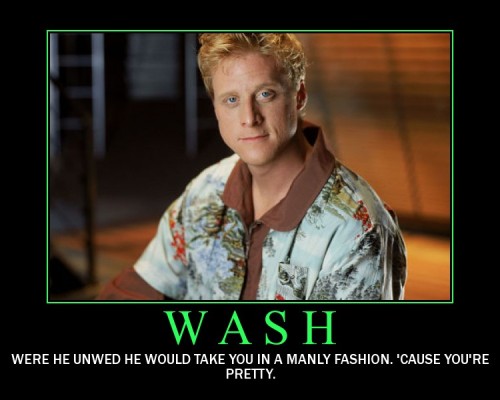
But I did have to stop and think.  Because I really did love Wash, but when he died I didn't hate Joss Whedon like I do now.  And Wash was actually the dead sort of dead that stays dead and doesn't come back next season and get his own hit spin-off.  Not to mention, I didn't hate Baz Luhrmann when Satine died in Christian's arms.  I didn't hate the writers of V for Vendetta when V died in Evie's arms.  Or any of the other people responsible for all of the other tragic stories I've watched, heard, and read through my life.  On the contrary, I've always had a strange love of melancholy.  Really, I've always preferred stories flavored with tragedy rather than comedy.

This is not unique to me.  The beauty of sadness is a western tradition.  From Oedipus Rex to Romeo and Juliet, to Titanic, western society has always had an obsession with pain and suffering and love being lost.
Interestingly, this is something rather unique to Western culture.  In traditional Chinese and Japanese stories the endings are almost exclusively happy.  Certainly there are terrible things that the hero or heroine go through, but in the end they triumph; they don't die, or go mad, or lose the most important thing in their life.  This begs the question, is our cultural obsession with tragedy something we've somehow learned/conditioned within society or is it actually part of the human condition itself?  After all, with the westernization of their society, tragedy is starting to creep into the stories being told in East (at least, that is what I've been told by people who would know).  Are we all, then, obsessed with tragedy?

What is it exactly that draws us to sad things?  In ancient Greece the first drama was tragic.  To be precise, Greek drama was born as a vehicle to achieve catharsis.  They would put on productions of these tragic plays, Oedipus, Antigone, or Achilles, where the protagonist was always subject to one tragic flaw.  No matter how noble he (or she) was, this tragic flaw would doom him to destruction.  He couldn't escape his fate and he would die, often in horrible circumstances.  The audience would watch his destruction; they would pity him and be horrified by the depth of his fall.  That was the catharsis.  The entire purpose of the play was to inspire those emotions of pity and horror in the audience, and thereby purge them, if only for a time.
I could believe that the draw of tragedy is the cathartic experience.  It is the vicarious experience of some of the most intense emotions human beings are capable of; still real, yet removed to a safe distance.  It wasn't actually your lover who was killed, but you watched her lover get killed and you imagined you were her, how you would feel, and you wept.  Except...why would you want to experience that?  Why would you seek it out?

I don't think it is simply the experience of the emotions; it is that there seems to be something beautiful in them, in the feeling of them.  We seek out these opportunities to feel the most painful emotions we posses because there appears to be some intrinsic worth in doing so.  What is it?  Think of that scene in Stranger Than Fiction, when  Doctor Hilbert has read Harold's death and he tells him he has to die.  Unfortunately, I can't find the exact quote right now, but he says something along the lines of "Everyone dies eventually Harold.  A heart attack in your bathtub in twenty years, you choke on a piece of chicken tomorrow, everyone dies.  But I guarantee, however you go, it won't be as poetic, as beautiful, or as full of meaning as what she has written for you."  While Dustin Hoffman has some insensitive moments written for laughs, this is not one of them.  Nor do we write it off as a skewed opinion from an out-of-touch professor as we do some of his other callous lines.  When Dr. Hilbert says it we mourn for Harold and his newly discovered life but we accept it.

The thing is, all people suffer.  But some people suffer with dignity and others suffer without.  Suffering without it is something to which we are all susceptible, and which we all fear.  People who cannot endure are succumbing to a weakness we all could possess.  I think that is what draws us to tragedy and that is where the cathartic experience comes in; we can't condemn the people who cannot rise to the challenge because we might not either.  But the stories of triumph are an inspiration.  They offer us a hope of what we might be. Suffering with dignity requires depth of character and maturity of mind.  People who endure something tragic are exemplifying the best of human abilities.  The beauty of sadness is in the exchange between what is and what could have been.  Pain brings out the best and worst of a person.  It is poignant and melancholy and beautiful to see failure and imagine the success that could have been.  It is inspiring, uplifting, and excruciating to see a strong bright soul punished over and over and refuse to break.  We watch and film and write and read and hear and tell these stories over and over again to see what humans are capable of.  What we think they're capable of, and what we think they aren't.  We explore the consequences at the boundaries of the human spirit and search for inspiration and consolation.

Which, I guess, leaves us at a good place to come back to where I started all of this.  My heartbreak over two fictional characters from TV shows.  I'd be hard pressed to come up with any real distinction between Rose and Angel and the rest of the tragic pantheon.  I can't rationally prove why the ending of their stories made me literally, actively angry at their writers, where other tragic stories convert me to near worship of the genius of their creators.  No rational reason.  But irrationally...I love them.  For some reason I identify and connect with their stories.  Embarrassing as it is to admit, you could easily make the argument that I no longer experience their tragedies as external performance events I sympathize with, but rather as personal losses of my own.  It isn't just the Doctor losing Rose, I lost her too.  Not only Buffy was powerless to save Angel, so was I.  And then the show goes on.  The Doctor flies away to find a new companion.  Buffy goes on to find a new vampiric lover.  Life, essentially, goes on.  Next week, same time same channel, the story continues with new characters.  In the fictional world of the story the Doctor or Buffy might have had time to mourn, but I didn't.  And if I am this crushed over fictional characters, then what hope is there for me in the real world with real loss?  Perhaps this is the root of my anger at Whedon and Davies.  They force me to admit that I may not be quite as strong as I would like to think I am.

I guess this means I've not yet experienced enough catharsis...

Sunday, February 27, 2011

An Unheard Voice

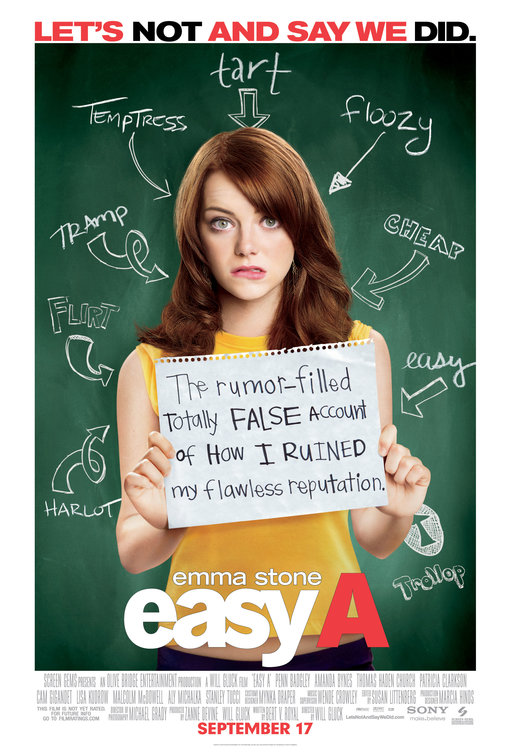
I just watched the movie Easy A.  I have mixed feelings about the movie as a whole.  Half of me loves the sass, the humor, and the independence.  The other half wonders about the morality, the rationale, and the parenting (some of which is awesome and the rest of which is…less so). 
But aside from the particular pros and cons of this movie, there was one particular thing that really bugged stood out to me—something that is merely a reiteration, recycled from a host of previous movies, TV shows, and books.  Here we have, yet again, the seemingly archetypal “Heinous Bitch Christian” (technically, if we want to include literature, this should probably be the “Heinous Bastard Christian” since it could be either male or female).  This is a stock character which is becoming, I’m very sorry to say, ever more ubiquitous in our culture.  It’s an evolution, I think, of the original “Heinous Bitch” in general.  You then got the “Heinous Bitch ‘A’ Student/Do-Gooder” from that, and now, apparently, we’ve moved to the HBC. 
What exactly is an HBC you ask?  Really?  You have to ask?  Ok, well, basically it is any overtly Christian character. ever.  Um…let’s see…there’s Mandy Moore’s character in Saved.  There’s Sarah Jessica Parker in The Family Stone.  There’s any religious character in any Chris Crutcher book ever written (oh, you don’t know who that is?  Only one of my favorite YA authors of life).  And then, of course, there is Amanda Bynes in last night’s Easy A.  Basically, this is the character that is incredibly vocal about his or her status as one of God’s Elect, and makes it his or her mission in life to judge, condemn, and persecute all the rest of the vile sinners in the world.  They are close-minded; they are stubborn; they are usually nonsensical and hypocritical; they are vindictive and persistent and utterly incapable of compromise or common sense. 
Now, I’m not naïve, I know that HBC exists as a stereotype because those people exist in real life.  I know that they are every bit as painful as they sound.  I even appreciate their comedic or dramatic value in a story.  I understand the value of depicting this sort of person both for pure dramatic effect (they function as such a very handy foil for the plucky heroine to exhibit her sass and independent thought) and for didactic value as well.  I read Staying Fat for Sarah Byrnes some time in Jr. High I believe, and the character of Mark Brittain caused me to take a very honest look at myself.  I realized that, though I didn’t ever want to be a person like Mark, without realizing it, I had developed some similar traits.  Reading Brittain’s character allowed me to correct myself.
That being said, however, I feel a very strong need to speak out against the sheer universality of this perception.  Yes, those people do exist.  But they are not the only ones out there.  Nor, I am willing to argue, are they even the majority (ok, maybe that is an optimistic statement, but I’m going to make it).  Think about it.  Christians are a group just like any and every other—comprised of a vast variety of people, each distinct and individual from the rest.  Yet somehow, it has become acceptable in today’s media to pigeonhole this entire (extremely large) demographic into an incredibly insulting caricature of itself.  Imagine, for a moment, that we did that with any other demographic.  Imagine if every Mexican you ever saw in a movie was ignorant.  What if every homosexual was a moral degenerate?  What if every black was a criminal?  Every Jew a penny-pinching cheat?  All Muslims terrorists?
Just writing those sentences made me uncomfortable, and for good reason.  While one person may possess any given assortment of faults and virtues, it is patently ridiculous to assign those same faults and virtues in the exact same proportions as a blanket across a group of people linked loosely by two or three arbitrarily selected points of correlation.  People are infinitely varied and unpredictable.  When, truly, has a stereotype really ever explained an entire demographic?  When has it ever been an effective predictor of behavior? 
Ah, you say, we can see your point as far as ethnicity or sexual orientation goes.  But how can you claim that a religion is a loose correlation?  Religion is a framework of beliefs, which consequently, act as a determiner of behavior.  Thus, a large group of people who share a religion would, logically, share behavior.  Therefore it is perfectly justifiable to condemn Christianity as a whole based on the fraction of their population who act out stupidly.  As one Christian is, so must they all be.
There are two answers to this argument, the logical and the theological.  In theory perhaps, yes, every member of a single religion should each behave exactly the same.  In any given set of circumstances any given Jew, Muslim, or Christian should react the exact same as any other given Jew, Christian, or Muslim.  Of course, the moment you make a statement like that you see how practically ridiculous it is.  No two people are precisely the same.  None of them have had the same experiences, think the same way, or are seeking the same things from life.  And those are just differences of individuals, to say nothing of differences between sects, branches, or types (though Baptists, Catholics, and Mormons each qualify as “Christians”, it is silly to imagine that the effects of each on their members are identical…the same for Shiites and Sunnis, or Orthodox, Conservative, and Reform Jews).  Suffice it to say, while at first glance it may appear as though religion ought to be a highly unifying predictor of behavior, clearly it is not. 
And as for those people who use Christianity as a reason to act out stupidly?  I would argue that these people have no idea what Christianity really is, let alone represent it as a whole.  In its deepest, most fundamental core, Christianity is a religion of love.  Christ commanded his followers to serve others and to love one another, even them that despitefully use you.  The people that you see in these movies and books have no understanding of this concept.  They are filled with hate, not love.  And that hypocrisy is not overlooked.  How often is this Christian character caught between their judgments of others and their own failure to live up to their own ideals?  Indeed, hypocrisy seems to be the reigning characteristic of the HBC.  A character who condemns everyone around him or her and then fails spectacularly in exactly the same things. 
Why does the Heinous Bitch Christian exist?  Or rather, why is it the only sort of Christian to exist in the popular media?  Why is it so impossible to create a character who is striving to truly live up to the ideals of Christianity?  A character who loves and respects those around him?  A character who understands that no one, including herself, is perfect.  A character who tries to serve others.  A character who is all of those things, and Christian.  Why does this character not exist?  Why is society quiescent as a vast slice of its population is repeatedly maligned and accused of bigotry, hatred, idiocy, and hypocrisy over and over and over again?  Why are Christians exempt from the same demands of respect that every other demographic is so justly accorded?  Yes, the Heinous Bitch Christian does exist, and will, sadly, always have a place in modern story telling.  But the true Christian exists as well.  And he deserves to have his story told as well.  She deserves a place in society.  They shouldn’t be ignored and judged unfairly simply because they don’t make a scene about it. 
So I make a request.  Don’t perpetuate the stereotype.  Make some movies where the ignorant douche bag is unaffiliated with any religion at all.  Just once, try to write a devout Christian character who is not a jerk.  Just give Christianity the respect to recognize that it contains all kinds of people, both good and bad, just like any other large group.  Please.
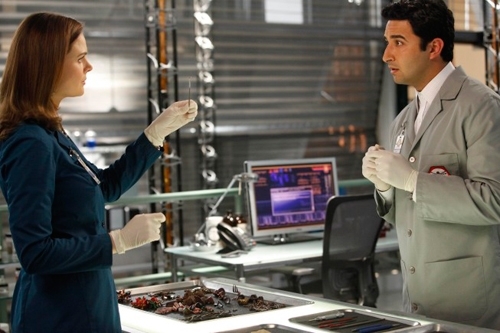
This is Arastoo Viziri, a character from Fox's "Bones".  He represents the only intelligent conservative religious character I think I've ever seen on TV.  Way to go Bones!

Friday, February 4, 2011

Impulse Control

Every Monday, Wednesday, and Friday I walk up to my 2 o'clock English Reformation class.  I walk the same way every day--out the back of the complex, across the parking lot, up the stairs, around another parking lot, and up the hill to campus.  Once on campus I walk past the Widtsoe  building, around the front of the MARB, up between the Eyering Science and the Kennedy Centres, and finally across the quad to the JFSB.  Somewhere, between the MARB and the JFSB, every Monday, Wednesday, and Friday I pass this one professor headed to class. He's a short man, I want to say not even five feet, but I'm probably not giving him enough credit.  But even more than his diminutive height, the one thing I notice about this man is his giant, bald head.  This huge, white, shining noggin attached seemingly directly to his shoulders.  There is little or no neck in evidence.

I see this man three times a week, sometimes more as he and I cross paths again returning from our respective classes.  And every time I see him, this great bald-headed man, I am overwhelmed with a desire to reach out and rub his head as I walk by, much as one might do to a statue or handrail one passes every day.  I can't tell you how very difficult it is, faced with this temptation so very often, to keep my hands resolutely in my pockets.  Every time we pass I imagine the expression I could so easily call into being on his face.  I imagine the enjoyment of an impulse, long deferred, at last fulfilled.  And I smile to myself, shove my hands deeper into my pockets, and continue walking.

Thursday, January 13, 2011

More music that ought to be listened to

If you are interested in the glorious variety of the human voice I offer you a few more choice examples.

Nina Simone's throaty melancholic voice makes this song all that it is:

I don't think that song will ever stop moving me

Then, in a wonderful example of the difference voice and arrangement can make I give you this cover of Radiohead's "Creep" by Scala, a Belgian girls' choir.  Be warned, its a Radiohead song, so there are a couple uses of the F word.


Then there is this, from the movie Bright Star

the interweaving of voices and tones is certainly as beautiful and intriguing as any instrumental orchestra could ever be.

And speaking of the intermixing of voices, listen to this song on the highest quality you can (I promise it makes a difference) and listen to how beautiful each voice individually is and then how fabulous all of them sound together.  The two tenors singing in harmony, and then that great bass coming in beneath...oh!  I could listen to this song over and over my whole life